Getting Started in Metal Detecting
Embarking on the journey of metal detecting opens up a fascinating world where history, science, and the great outdoors intersect. For beginners, the learning curve can initially seem steep. Modern detectors are sophisticated electronic instruments, and understanding the basic principles of operation is essential to turn a frustrating walk in a field into a rewarding pursuit.
Understanding the Core Equipment
Before stepping into a field, it is crucial to understand the anatomy of a metal detector. The most common entry-level machines operate on Very Low Frequency (VLF) technology. A standard VLF detector consists of a control box (the brain), a shaft, and a search coil. The coil transmits an electromagnetic field into the ground. When this field encounters a conductive object, such as a coin or a relic, it induces a secondary magnetic field in the object, which the coil then receives and the control box processes into an audible signal.
Aside from the detector itself, a beginner requires a few supplementary tools. A high-quality digging tool—often a narrow, serrated spade known as a "lesche" or digging knife—is vital for cutting clean plugs in the soil. Additionally, a handheld "pinpointer" is highly recommended. While the main coil locates the general area of a target, a pinpointer dramatically reduces the time spent sifting through loose soil by zeroing in on the exact location of the item within the hole.
The Setup: Ground Balancing and Sensitivity
One of the most common mistakes newcomers make is failing to properly adjust their machine to the specific soil conditions. The earth is naturally filled with minerals, particularly iron oxides, which can cause false signals and mask desirable targets. This is where "ground balancing" comes into play. Ground balancing calibrates the detector to ignore the natural minerals in the soil, allowing it to focus on anomalous conductive targets.
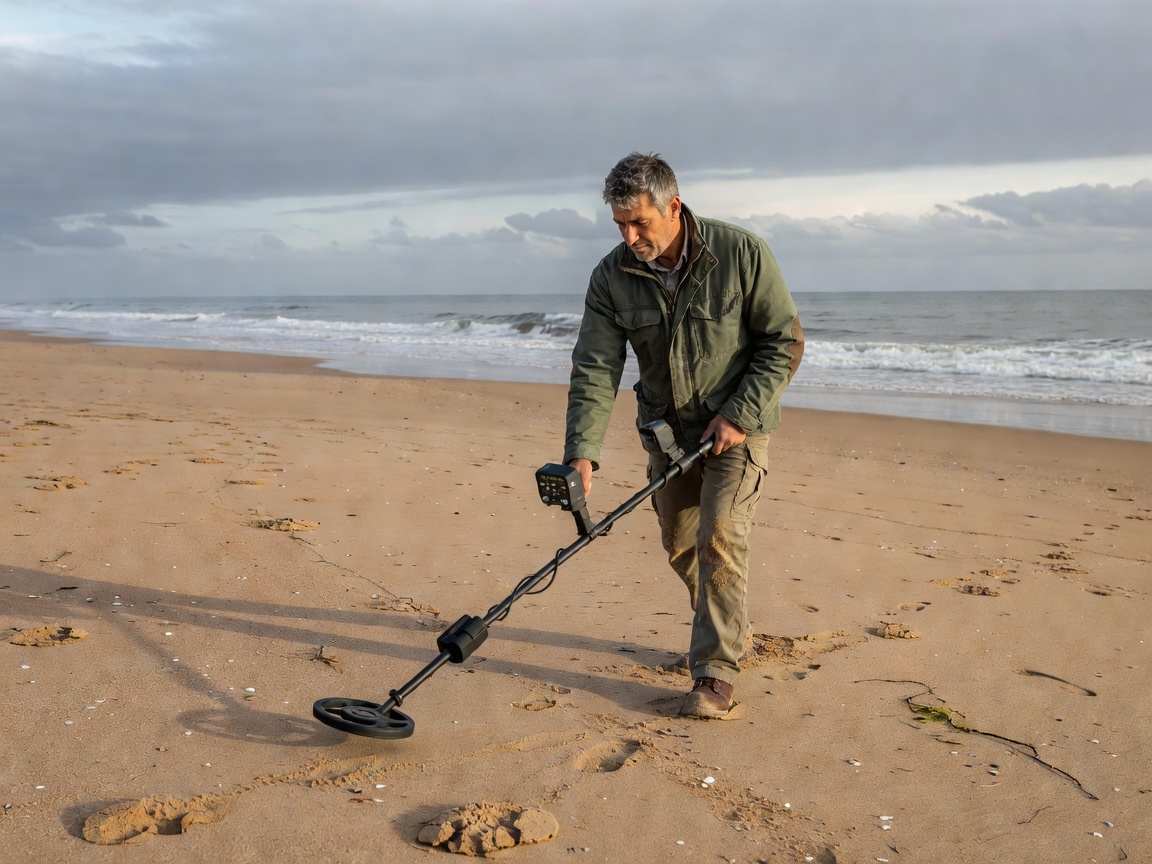
Most modern beginner detectors feature automatic ground balancing or preset settings, which are sufficient for mild soils like standard parks or woods. However, if you are detecting on a wet saltwater beach, the high conductivity of salt requires specific adjustments or specialized multi-frequency machines. In tandem with ground balance, adjusting your sensitivity is key. Running a machine at maximum sensitivity might seem like the best way to gain depth, but in highly mineralized soil or trash-heavy areas, high sensitivity will result in a cacophony of false signals. It is often better to lower the sensitivity to maintain a stable, reliable threshold tone.
Mastering the Swing Technique
The physical act of sweeping the detector coil across the ground—the "swing"—is just as important as the electronic settings. The coil must be kept parallel to the ground and as close to the surface as possible without scraping it. A pendulum-like swing, where the coil lifts at the edges of the arc, will cause the detector to lose depth and potentially emit false signals at the end of each sweep.
Your sweep speed should also match the recovery speed of your machine. VLF machines require motion to detect a target, but swinging too quickly can cause the processor to miss deep or small targets lying next to trash (a concept known as "target masking"). A slow, methodical, overlapping sweep ensures that the coil covers every inch of the ground, maximizing the chances of intersecting a target's electromagnetic halo.
The Digging Process: Ethics and Efficiency
When you receive a solid, repeatable signal, the digging process begins. It is imperative to practice responsible recovery techniques to preserve the environment and maintain good relationships with landowners and local authorities. In grassy areas, the standard method is the "plug." Using a specialized digging tool, cut a horseshoe shape around the target area, leaving a hinge of grass attached. Fold the plug back, locate the target (preferably using a pinpointer), extract it, and carefully fold the plug back into place, tamping it down firmly so that it heals quickly without killing the grass.
Conclusion
Patience is the ultimate virtue in metal detecting. Your first few outings will likely yield more modern trash—pull tabs, foil, and rusty nails—than valuable artifacts. This is a normal part of the learning process. Over time, you will learn to interpret the nuanced audio tones and visual target IDs your machine provides, allowing you to dig less trash and find more treasure. Start in familiar, forgiving environments like your own backyard or a local permission, learn your machine's language, and enjoy the historical pursuit.